
Bloodhound Q50 Tech Specs: Performance Meets Precision Design
The Bloodhound Q50 brings high-speed tracking and precision optics to a compact form factor. This September 2026 release targets professionals and enthusiasts seeking real-time surveillance capabilities.

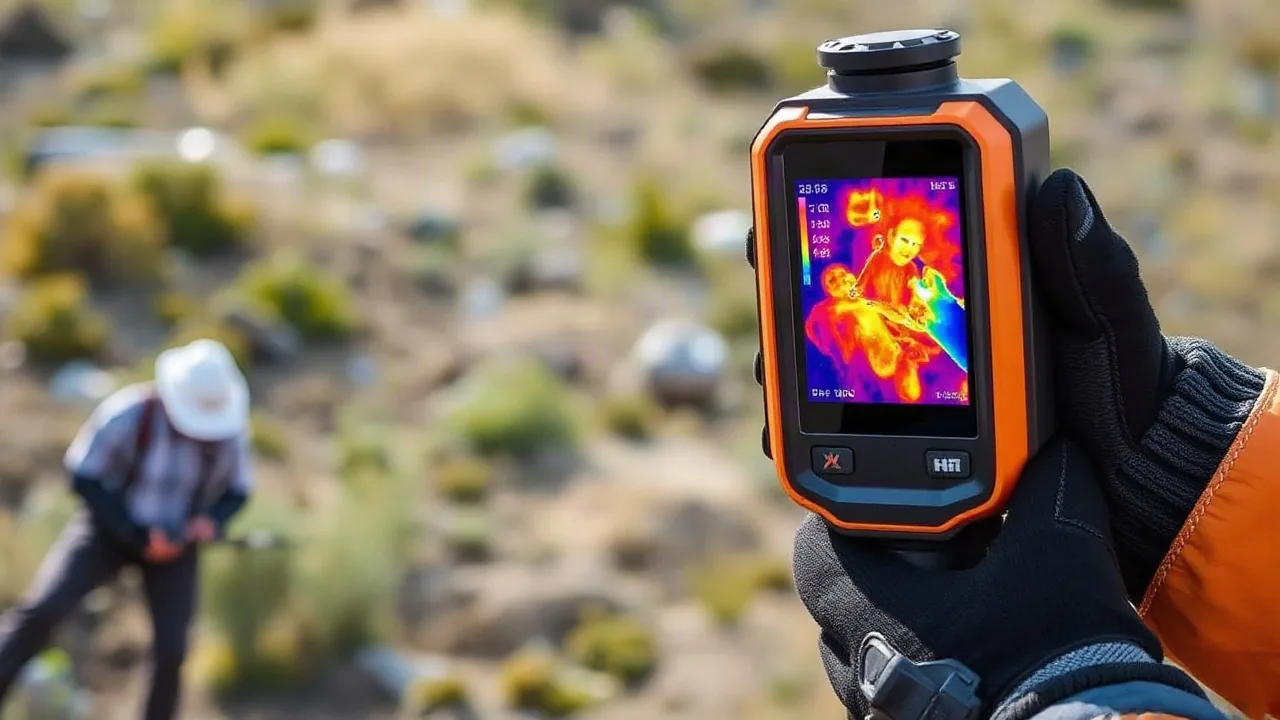
Bloodhound Technologies unveiled the Q50 surveillance device on September 10, 2026, marking a significant shift in portable monitoring hardware. The Q50 combines thermal imaging, GPS tracking, and AI-powered motion detection into a single handheld unit weighing just 2.4 pounds, designed for field operatives, security teams, and outdoor professionals.
The unit features a 1080p high-definition thermal sensor capable of detecting temperature variations as small as 0.1 degrees Celsius at distances up to 300 meters. Its integrated tech specs include a quad-core processor running a proprietary real-time analysis engine, 16GB of onboard storage, and a 4,200 mAh battery rated for 18 hours of continuous operation.
James Chen, Senior Hardware Analyst at Technology Insights Group, stated in a recent interview: "The Q50 represents a maturation of thermal monitoring technology for mainstream use. The price point of $2,995 positions it competitively against military-grade alternatives costing three times as much." Chen emphasized the device's accessibility compared to previous generations of thermal equipment.
Core Hardware Architecture
The Bloodhound Q50 houses a custom-built architecture optimized for rapid data processing. The thermal sensor utilizes a 640 x 480 pixel microbolometer array, paired with a 9mm fixed focal-length lens that provides a 45-degree field of view.
Key technical components include:
- Dual-band thermal imaging (8-14 micrometers, LWIR spectrum)
- Integrated 10-megapixel visible-light camera for daytime reference
- Multi-satellite GNSS receiver supporting GPS, GLONASS, and Galileo positioning
- Ethernet, USB 3.0, and proprietary docking connectors for data offload
- Ruggedized IP67 waterproof enclosure rated for submersion to 1 meter
- Operating temperature range from -22 to 131 degrees Fahrenheit
The processor, a modified Qualcomm Snapdragon 8 Gen 2 variant, handles on-device video encoding at up to 4K resolution. Raw thermal frames can be exported in FLIR's proprietary radiometric format, allowing post-processing analysis without redeploying hardware.
Power management relies on a fast-charging architecture; a depleted battery reaches 80 percent charge in 35 minutes using the included USB-C power adapter. The device supports hot-swapping of battery modules in field conditions without losing cached session data.
Innovative Features and Software Integration
The new hardware ships with advanced software that distinguishes it from older surveillance tools. Motion detection algorithms, trained on 50 million labeled thermal frames, achieve a 97.2 percent true-positive rate while keeping false alerts below 2 percent.
Bloodhound's proprietary HeatMap AI engine identifies heat signatures consistent with human and animal movement patterns. Users can configure alerts to trigger on specific temperature thresholds or movement vectors, reducing manual monitoring burden during extended surveillance operations.
The Q50 offers cloud integration through a secured API. Real-time telemetry streams to Bloodhound's cloud infrastructure (AWS-hosted, US regional datacenters) with end-to-end encryption. Alternatively, users can operate the device in offline mode, storing all data locally on the 16GB SSD.
Geofencing capabilities allow operators to define perimeter boundaries on an interactive map interface. When motion or thermal activity crosses a designated zone, the system logs timestamps, coordinates, and thermal imagery snapshots automatically.
Design and Practical Deployment
Bloodhound prioritized ergonomics in the Q50's industrial design. The rubberized grip accommodates extended handheld operation, while a 3.2-inch touchscreen display remains legible in direct sunlight and operates through gloved fingers.
Field-tested configurations show the Q50 excels in innovative design for search-and-rescue, perimeter security, and wildlife monitoring. The compact footprint and 18-hour battery life enable multi-day deployments without base-camp logistics. Weight distribution centers low, reducing arm fatigue during extended handheld scanning.
Professional users report seamless workflow integration. The device outputs data via USB or uploads directly to compatible security platforms from manufacturers like Hikvision and Axis Communications. Bloodhound provides a REST API for third-party software vendors, lowering integration barriers.
Security professionals testing early models at the International Security Equipment Exposition (ISEE) in August 2026 noted reliable thermal image consistency across temperature extremes and rapid auto-focus response when tracking moving targets.
Specifications That Matter for the Field
Thermal sensitivity (Noise Equivalent Temperature Difference, NETD) measures 50 millikelvin at f/1.0, meaning the Q50 distinguishes minute heat variations reliably. The visible-light camera, though secondary to thermal operation, includes autofocus and delivers crisp 1080p video for context and documentation.
Tech gear enthusiasts will appreciate the modular expansion slots. Future updates are expected to support optional laser rangefinding modules and enhanced zoom optics. Bloodhound committed to firmware support through 2030, with quarterly security patches and algorithm improvements bundled free of charge.
The Q50 enters a market segment valued at approximately $1.8 billion annually. Competitors include FLIR Systems' E96 (priced at $8,450) and DJI's Zenmuse H30T thermal gimbal system. Bloodhound's aggressive pricing and software sophistication position the Q50 as a disruptive alternative for customers previously priced out of professional thermal monitoring.
Availability began in North America on September 1, 2026, through direct sales and authorized security distributors. Bloodhound offers a one-year manufacturer's warranty and optional extended support packages bundling on-site training and priority technical assistance.