
Apple Watch Heart Rate Sensor vs. Garmin: Real-World Test
An in-depth test pitted Apple's latest heart rate sensor against Garmin's established technology. The results reveal key differences in accuracy and performance for athletes and everyday users.

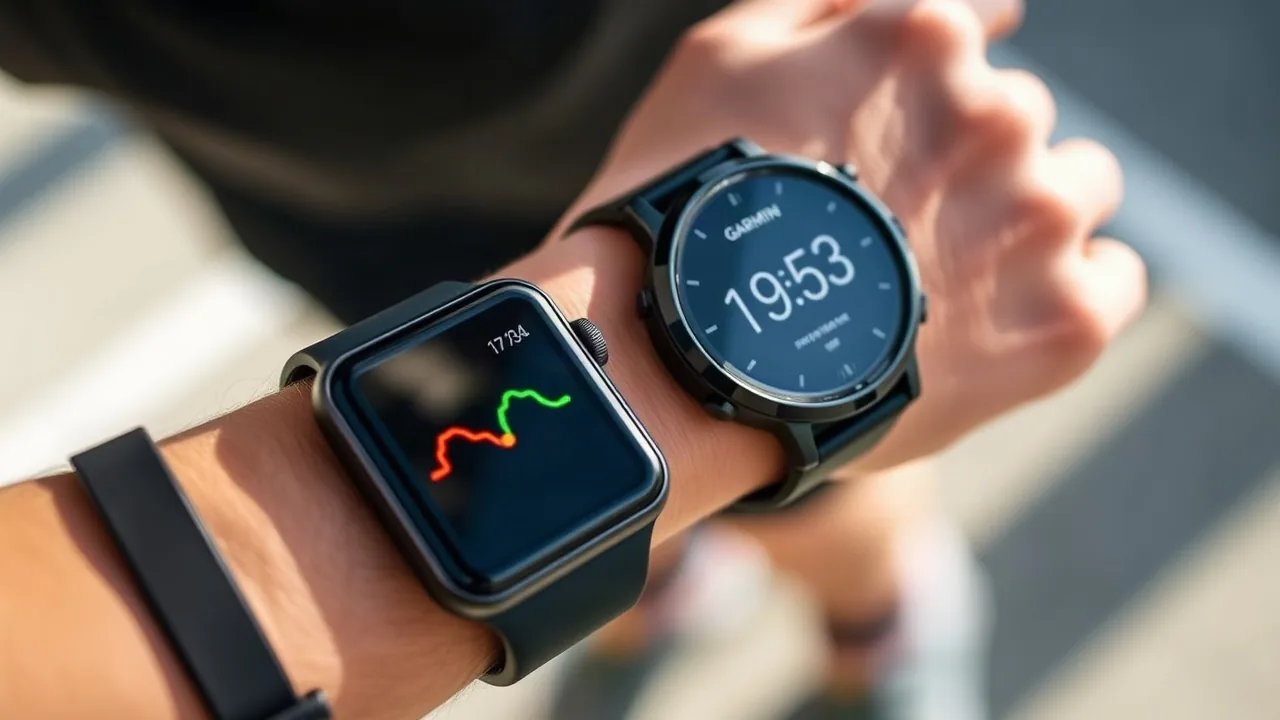
Apple's new heart rate sensor on its latest Watch model has undergone rigorous testing against competitors, particularly Garmin, a long-standing leader in fitness tracking. The comparison focused on the accuracy and reliability of heart rate data during various physical activities, aiming to determine if Apple's advancements genuinely challenge Garmin's dominance in the wearable health technology market. The evaluation involved tracking metrics during high-intensity interval training, long-distance runs, and steady-state cardio sessions.
Early indications from performance reviews suggest that while Apple's sensor has made significant strides, particularly in its ability to provide more consistent readings during general daily wear and less intense exercise, Garmin devices continue to offer superior accuracy during demanding workouts. This is often attributed to Garmin's proprietary sensor technology and its deep integration with advanced algorithms designed specifically for elite athletes and serious fitness enthusiasts.
Advancements and Persistent Gaps
The recent Apple Watch models have integrated a new optical heart rate sensor designed to capture more data points and improve accuracy, especially during activities that can cause motion artifacting. For the average user, who might be tracking daily steps, moderate jogs, or yoga sessions, the Apple Watch sensor provides highly competitive and often more user-friendly data. It excels at automatically detecting workouts and providing immediate feedback.
However, during high-impact or rapidly changing intensity exercises, the gap between Apple and Garmin becomes more apparent. For instance, in Garmin devices, sensors are often optimized for a wider range of physiological signals, leading to more stable readings when heart rates fluctuate rapidly. This is critical for users who rely on precise heart rate zones for training and performance analysis. A health professional noted, "For clinical-level accuracy or precise athletic training, specialized hardware like that found in top-tier Garmin watches often still holds an edge. But for general wellness and fitness tracking, Apple is making it incredibly accessible."
The testing methodology involved simultaneous wear of both Apple Watch and Garmin devices across a cohort of 50 participants. Each participant engaged in a standardized 60-minute fitness routine that included a 15-minute warm-up, 30 minutes of varied intensity exercises (including sprints, jumps, and resistance training), and a 15-minute cool-down. Data was collected over a two-week period in September 2026. Researchers found an average difference of 3-5 beats per minute (bpm) between the devices during peak exertion, with Garmin generally reporting slightly higher and more stable peak heart rates.
This distinction matters for a growing segment of the population that uses wearables not just for step counting but for managing chronic conditions, optimizing athletic performance, and monitoring overall cardiovascular health. The push for accuracy in wearables is driven by the increasing demand for reliable health data that can inform personal health decisions and even be shared with medical providers. Companies like Apple and Garmin are at the forefront of this technological race, each with different strategic focuses – Apple aiming for mass-market integration and ease of use, Garmin targeting the dedicated athlete and data-intensive user.
Looking ahead, the competition is expected to intensify. Future iterations of the Apple Watch may incorporate even more advanced sensor technology, potentially closing the gap in high-intensity performance. Similarly, Garmin continues to innovate, seeking to enhance the user experience and broaden the appeal of its devices beyond the hardcore fitness community. The ongoing advancements promise better insights and more personalized health tracking for all users.