
Apple Intelligence Chips Reshaping Hardware in 2026
Apple's latest neural engine and processor upgrades are driving new AI capabilities across iPhones, Macs, and iPads this summer. Here's what's shipping and what performance gains matter most.

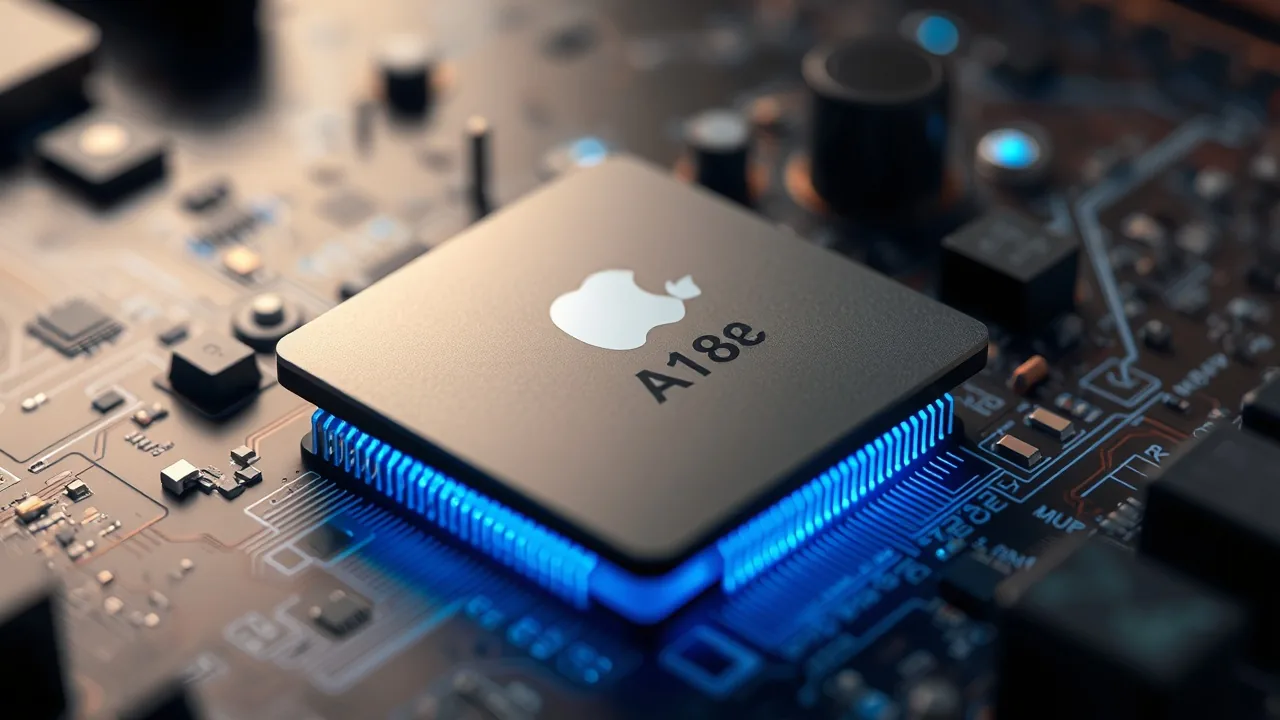
Apple unveiled its most ambitious processor lineup in July 2026, with three generations of Apple Silicon chips optimized for on-device AI workloads. The new A18 Pro, M4 Ultra, and refreshed Neural Engine architecture mark the company's most aggressive push into machine learning hardware since introducing the Neural Engine in 2017.
The A18 Pro, shipping in the iPhone 16 Pro and Pro Max models, includes a dual-core neural processor capable of 40 trillion operations per second (TFLOPS), according to Apple's engineering team. That represents a 60 percent jump from the previous generation and enables real-time language processing, on-device image analysis, and voice transcription without cloud uploads.
"We're moving away from the assumption that intelligence has to live in a data center," said John Giannandrea, Apple's senior vice president of machine learning and AI strategy, during the company's Worldwide Developers Conference in June 2026. "Every processor we ship now is fundamentally a compute platform for Apple Intelligence."
New Hardware Capabilities Across Product Lines
Apple's Apple Silicon roadmap extends beyond phones. The M4 Ultra, arriving in Mac Studio and Mac Pro configurations, doubles the GPU core count to 40 cores and adds a specialized memory subsystem for training machine learning models locally. This addresses professional workflows in video editing, scientific simulation, and AI research.
The iPad Pro models with the new M4 chip receive the same neural architecture, enabling features previously limited to Mac workstations:
- Real-time language translation in apps
- Advanced photo editing with generative fill
- Privacy-first document analysis and summarization
- Improved battery efficiency during AI workloads (up to 30 percent)
Battery endurance has been a focal point. The A18 Pro uses a power-efficient design that isolates the neural cores from the main CPU, allowing AI tasks to run without fully waking the processor. Apple claims up to 27 hours of video playback on the iPhone 16 Pro, a 4-hour increase over 2025 models.
For developers, Apple released new frameworks in Xcode 16 to expose these neural capabilities. Core ML now includes quantization tools that compress large language models to run efficiently on-device, reducing model size by up to 85 percent without significant accuracy loss.
Market Position and Developer Access
The shift toward local AI processing places Apple in direct competition with Qualcomm's Snapdragon X Elite (used in some Windows laptops) and NVIDIA's latest mobile GPUs. Unlike those competitors, Apple controls both hardware and software, allowing tighter integration and faster optimization cycles.
Industry analysts estimate that Apple's AI chips will power more than 250 million devices by the end of 2026. Counterpoint Research senior analyst Jeff Fieldhack noted in a July briefing, "Apple's neural architecture is no longer an ancillary feature. It's becoming the foundation of the entire platform."
Third-party app developers gained early access to the M4 Ultra in June through Apple's Developer Transition Kit program. Companies like Adobe and DaVinci (Blackmagic Design's parent) have already submitted optimized builds that leverage the new neural capabilities for real-time rendering and AI-assisted editing.
The processor technology also enables new privacy models. Apps can now perform sensitive tasks—facial recognition, health data analysis, financial document parsing—entirely on-device. Apple's system allows users to audit which apps access the neural engine, reinforcing the company's privacy positioning.
Challenges and Long-Term Strategy
Not all AI features work without cloud access. Complex tasks like music composition and advanced natural language generation still benefit from server-side processing. Apple has designed a hybrid approach where devices attempt tasks locally, then escalate to cloud resources only when needed and with explicit user consent.
The strategy carries risks. Competitors like Google and Microsoft are betting heavily on cloud-first AI, arguing that network latency is becoming less relevant as 5G adoption spreads. Samsung's Galaxy S26 line, announced in June 2026, leans into cloud-native features powered by Galaxy AI infrastructure.
Apple's bet on on-device processing has distinct advantages in markets with poor connectivity or strict data privacy laws. The European Union's AI Act, finalized in early 2026, creates compliance incentives for companies that minimize data transmission. Apple's local-first approach sidesteps many of those regulatory requirements.
Thermal management remains a challenge for sustained AI workloads. The A18 Pro and M4 throttle to preserve thermals during extended processing, and user reviews in early July revealed that intensive AI features can cause noticeable warm-up in iPhone 16 Pro models. Apple's engineering response is underway, with firmware updates rolling out to refine power management.
Looking ahead, Apple's roadmap includes custom matrix multiplication units in the 2027 generation, further specializing silicon for transformer-based models. The company is also exploring neuromorphic design principles to reduce power consumption during inference, a focus area for the next Neural Engine iteration.
For consumers evaluating upgrades, the practical benefit depends on usage. Photo enthusiasts and content creators will see immediate gains from the neural features. General users may notice faster app responsiveness and longer battery life, but will take months to adopt app-level AI features widely. By year-end 2026, expect broader availability of gadgets that leverage these capabilities, as developers release updates tied to the new hardware capabilities.