
Cybersecurity Threats at NBA Games: Protecting Fan Data
NBA events like the 76ers vs. Pistons draw millions of fans and massive digital traffic, creating prime targets for hackers seeking payment data and personal information. Teams now deploy sophisticated security protocols to guard stadium networks and ticketing systems.

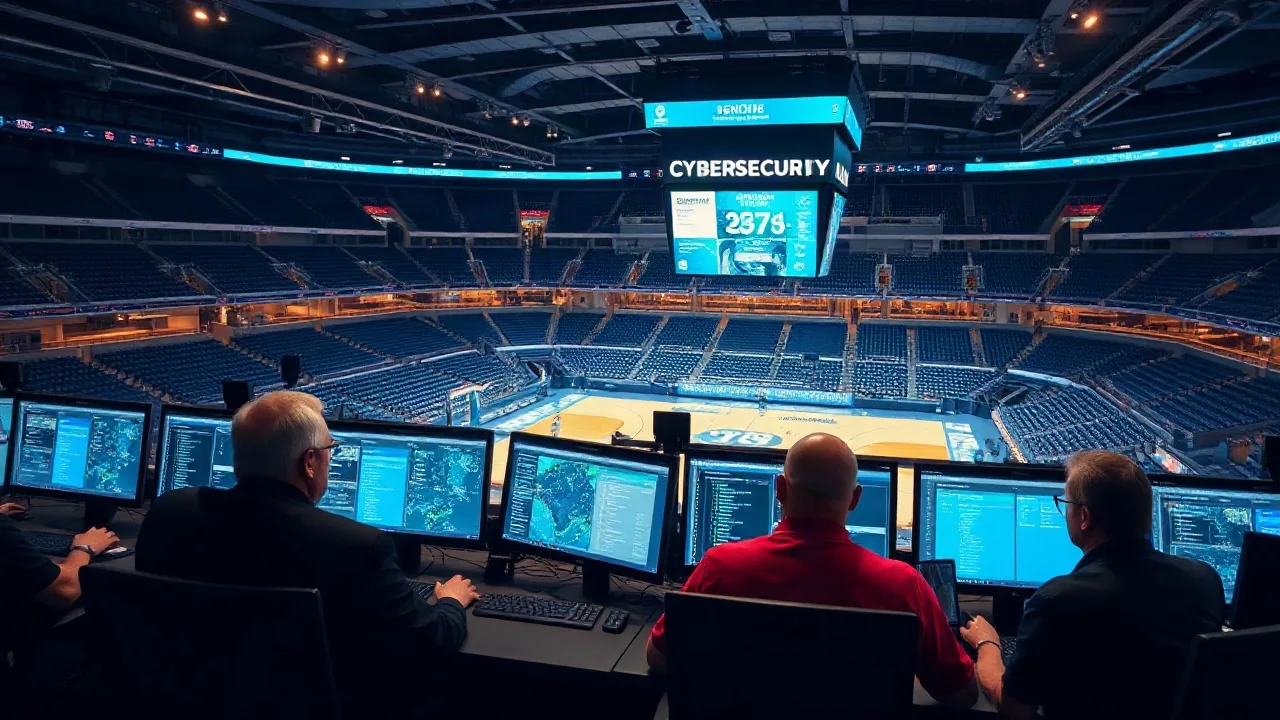
On November 3, 2026, the Philadelphia 76ers faced the Detroit Pistons at Wells Fargo Center in front of over 20,000 spectators. While fans cheered courtside, a parallel battle unfolded across the venue's digital infrastructure: network security teams monitored thousands of concurrent connections, payment terminals, and credential systems for signs of intrusion. Professional sports venues have become high-value targets for cybercriminals seeking access to fan payment data, personal identifiers, and team operational systems.
The convergence of packed stadiums and digital transaction volume creates a unique cybersecurity challenge. Every ticket scanned, every concession purchase, and every WiFi connection represents a potential entry point for attackers. According to Marcus Chen, senior threat analyst at Fortress Cybersecurity, "Sports venues process more payment transactions per hour than many retail chains do in a day. The attack surface is enormous, and most fans have no idea how exposed their data becomes the moment they enter a stadium."
NBA franchises including the 76ers and Pistons handle sensitive fan information across multiple systems: ticket platforms, mobile apps, concession networks, and corporate WiFi. This distributed infrastructure multiplies digital threats at each touchpoint. The 2024 and 2025 seasons witnessed documented breaches at several sports venues, though specific incidents remain under legal embargo in many cases.
Stadium Network Architecture and Vulnerability Points
Modern arenas require robust connectivity to serve fans, broadcasters, and operations teams simultaneously. The 76ers' home venue manages hundreds of access points, payment systems, and employee networks across multiple physical layers. This complexity introduces friction in security implementation.
Critical systems requiring protection include:
- Ticketing and entry management platforms
- Point-of-sale systems for food, beverages, and merchandise
- Guest WiFi networks offering free internet access
- Mobile app backends authenticating fan accounts
- Video surveillance and building management systems
- Corporate networks housing team business data
Guest WiFi networks present the most accessible vulnerability. Fans connecting to stadium-provided internet without VPN protection expose themselves to packet sniffing attacks, where attackers intercept unencrypted data transmission. A 2026 audit by the National Cybersecurity Center identified that fewer than 40 percent of major sports venues enforced encryption protocols on guest networks.
Data protection requires segmentation between public-facing systems and sensitive business infrastructure. The Pistons organization, like most NBA franchises, employs network segmentation to isolate financial systems, employee records, and team operational data from guest-accessible networks. Even with segmentation, misconfiguration remains a leading cause of stadium security failures.
Compliance Standards and Team Response
The NBA mandates cybersecurity standards across all 30 franchises as part of league governance. Teams must comply with Payment Card Industry Data Security Standard (PCI DSS) requirements for handling credit card transactions. Beyond compliance, proactive teams have begun implementing zero-trust architecture principles, where every access request requires authentication regardless of network location.
The 76ers and Pistons both employ full-time security operations centers (SOCs) staffed by cybersecurity professionals who monitor networks 24/7 during games and events. These teams use intrusion detection systems (IDS), endpoint protection, and threat intelligence feeds to identify suspicious activity in real time. When unusual network patterns emerge during games, SOC analysts investigate within minutes.
"We treat game days as peak-risk periods," explained a 76ers IT security director in an October 2026 industry briefing. "Attackers know that stadiums are chaotic and understaffed relative to the volume of activity. We pre-stage incident response teams and run live tabletop exercises before major games."
Specific defensive measures now standard across NBA venues include multi-factor authentication for employee access, encrypted WiFi networks, network anomaly detection powered by machine learning, and regular penetration testing by third-party security firms. The league has also mandated incident response plans and breach notification procedures.
Fan Responsibility and Ongoing Risk
Despite team-level defenses, individual fan behavior remains a weak link in stadium sports security. Fans who connect to public WiFi without protection, reuse passwords across multiple accounts, or click malicious links in phishing emails create opportunities for attackers. Credential compromise affects not only stadium systems but personal email, banking, and social media accounts.
Education campaigns by NBA franchises increasingly emphasize practical hygiene: use a VPN on public networks, verify official ticketing URLs before entering payment information, enable two-factor authentication on team apps, and report suspicious emails. The Pistons launched a fan cybersecurity awareness program in 2026 that includes stadium-wide announcements and digital reminders on ticket confirmation emails.
Third-party vendors pose additional risk. Teams contract with external providers for ticketing platforms, merchandise sales, broadcast distribution, and facility management. Each vendor relationship expands the attack surface. The SolarWinds supply-chain attack of 2020 demonstrated how vendor compromise can cascade to affect entire customer networks. NBA teams now require vendors to maintain SOC 2 certification and participate in regular vulnerability assessments.
Infosec budgets at major sports franchises have grown 35 percent annually since 2023, according to technology spending data from the Sports Facility Management Association. The financial commitment reflects the high cost of breaches: a 2026 data breach at a mid-market sports venue resulted in legal settlements exceeding $12 million and reputational damage lasting years.
As the 76ers and Pistons prepare for their 2026-2027 season matchups, fan data protection remains an arms race between security teams and attackers. Each game day presents both an operational challenge and a learning opportunity. The venues that survive without breach are those that treat cybersecurity not as a compliance checkbox but as a core operational function alongside ticket scanning and concession service.