
Synthetic Cells Mimic Life: Scientists Create Lab-Grown Organisms
Researchers have engineered synthetic cells from nonliving components that can grow, replicate genetic material, and divide. The breakthrough marks a significant step toward creating artificial life but raises biosafety concerns.

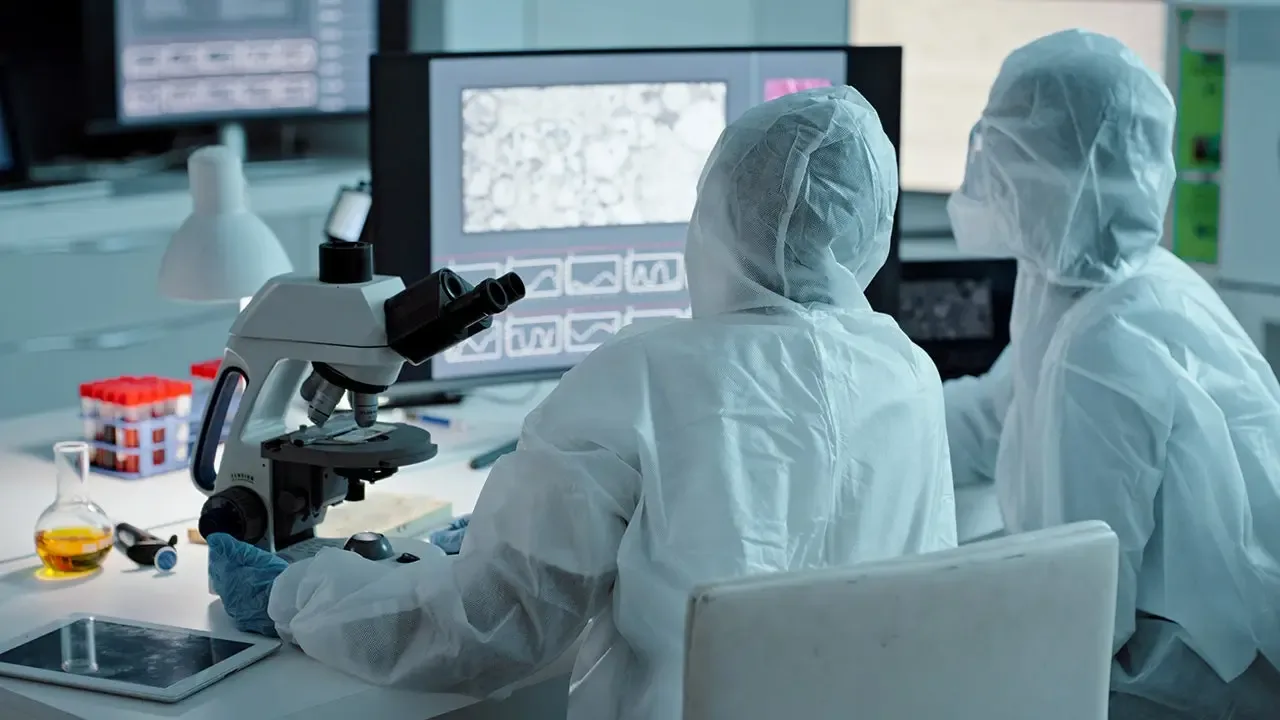
Scientists at the University of Minnesota have announced a significant advancement in synthetic biology, creating what they describe as the most life-like synthetic cell to date. Assembled entirely from nonliving chemical components, this laboratory-made system exhibits key characteristics of life, including growth, genetic material replication, division, and the transmission of beneficial traits to subsequent generations. The research, detailed in a preprint on bioRxiv, represents a substantial stride toward the creation of artificial life, though the synthetic cells currently require highly controlled environments and external nutrients to function.
The synthetic cell, dubbed "SpudCell," was constructed from scratch using chemically defined, nonliving materials, a departure from earlier methods that often modified existing organisms. Its genome, comprising 90,000 base pairs, enables SpudCell to produce proteins, duplicate its DNA, consume nutrients, grow, and undergo cell division. "One of the most ambitious and fascinating goals of bioengineering is to build a biochemical system that could cross the threshold from chemistry to life," the researchers stated in their findings. They emphasized that this work demonstrates "the first minimal cell with a cell cycle, genetically encoded growth and division, all coupled to selection and competition."
A notable experiment involved introducing a genetic mutation that favored faster growth in some synthetic cells. Over several generations, these accelerated cells became more prevalent, outcompeting slower variants and passing on their advantageous traits. This process illustrated a fundamental aspect of natural selection, showcasing how environmental pressures can drive evolutionary changes even in artificial systems. The team views these developments as "key milestones towards construction of synthetic life," potentially paving the way for the design of entirely artificial organisms for various biotechnology applications.
Challenges and Future Directions
Despite these achievements, the researchers acknowledge that SpudCell remains considerably less capable than the simplest known living cells. The synthetic entities cannot survive outside stringent laboratory conditions, relying on external nutrient supplies and specialized cellular machinery. Furthermore, the process of cell division was not perfectly efficient, with only about 30% of daughter cells successfully inheriting the complete synthetic genome after five generations. These limitations highlight the substantial gap that still exists between current synthetic biology capabilities and the creation of truly self-sustaining artificial life.
The implications of this research extend beyond scientific curiosity. The ability to recreate core life functions from nonliving materials opens new avenues for designing biological systems tailored for specific tasks. However, the increasing sophistication of synthetic cells also brings forth significant biosafety and biosecurity considerations. "This project offers a significant milestone towards evolvability of synthetic cells, making it more likely that more robust, autonomous systems will be available soon," the authors noted. They also underscored that this progress "highlights the urgent need to develop a safety and security framework for future synthetic cell engineering."
Looking ahead, the University of Minnesota team plans to enhance the self-sufficiency of synthetic cells by enabling them to regenerate more of their internal molecular components. Efforts will also focus on improving the fidelity of genome distribution during cell division and developing mechanisms for natural mutation to occur, rather than relying solely on researcher-introduced changes. The scientific community will be closely monitoring the peer-review process for these findings, as they could profoundly influence the future trajectory of synthetic biology and our understanding of life itself.