
Australian Dolphin 'Bubbles' Forces Fish to Vomit for Meals
A dolphin, nicknamed Bubbles, in Australia has been observed forcing smaller fish to regurgitate their meals before consuming the regurgitated food. This unusual feeding strategy has been documented by researchers.

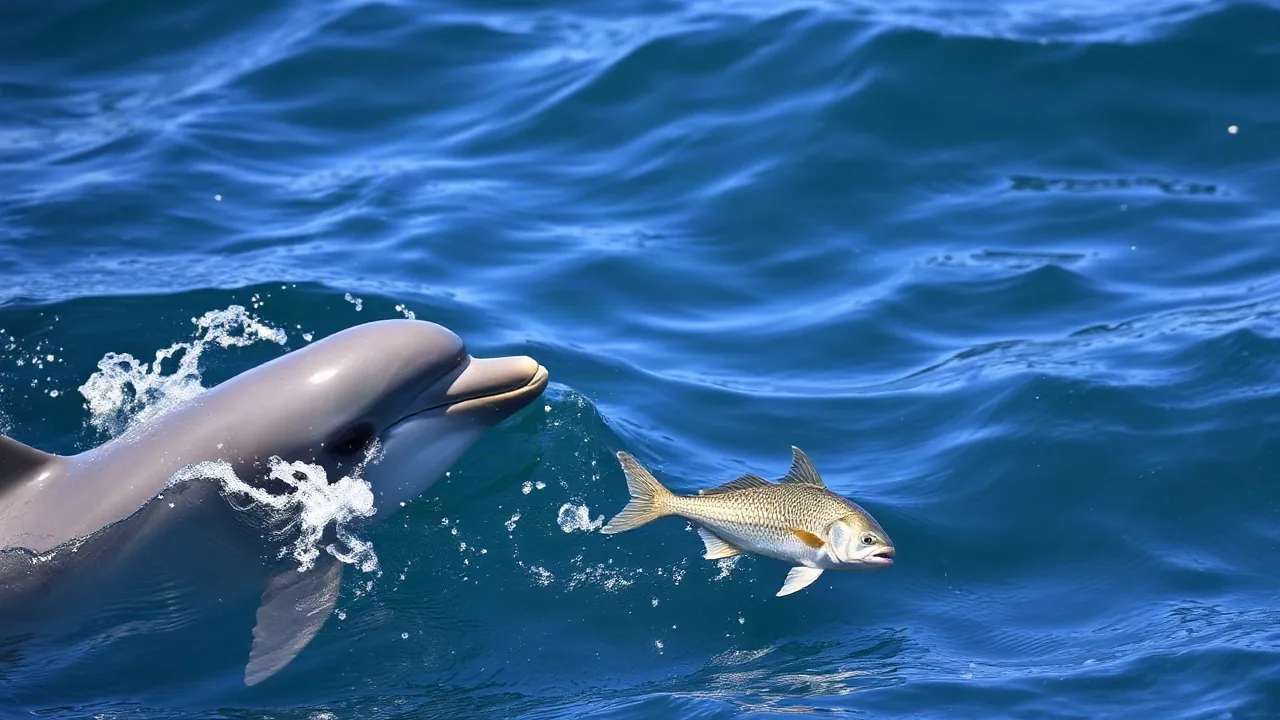
Researchers in Australia have documented an unusual and seemingly unpleasant feeding behavior by a dolphin nicknamed "Bubbles." The marine mammal has been observed actively chasing smaller fish until they expel their stomach contents, which Bubbles then consumes. This peculiar method of obtaining food has captured the attention of marine biologists and the public alike.
The behavior, filmed by scientists, shows Bubbles employing a relentless pursuit strategy against his prey. Instead of a direct kill, the dolphin's persistent harassment causes the smaller fish to undergo emesis, effectively vomiting up their recent meals. Bubbles then capitalizes on this involuntary expulsion, feeding on the regurgitated fish matter. This tactic represents a fascinating, albeit unappetizing, adaptation in the complex world of marine predator-prey dynamics.
Ecological Implications and Dolphin Behavior
While the specifics of Bubbles' diet are still under investigation, this observed behavior raises questions about dolphin intelligence and the diverse strategies employed for survival in the wild. Experts suggest that this might be a learned behavior, possibly passed down through generations, or a specialized tactic developed in response to local environmental conditions and prey availability. The efficiency of this method, if successful, could provide a significant advantage to the individual dolphin. It highlights the remarkable adaptability of these cetaceans, known for their complex social structures and problem-solving capabilities. The observation underscores the ongoing discoveries being made in marine biology and the intricate relationships within ocean ecosystems.
The documentation of this behavior adds to the growing body of knowledge about dolphin feeding habits, which are known to vary significantly across different populations and environments. From cooperative fishing to the use of tools, dolphins have consistently demonstrated innovative approaches to securing sustenance. The "vomit fishing" observed in Bubbles, however, presents a particularly striking example of extreme foraging behavior. Further research is anticipated to explore the frequency of this tactic and its impact on the local fish populations and the dolphin's own health.