
NASA Overhauls Agency Structure to Boost Moon Missions, Space Tech
NASA is reorganizing its directorates and empowering field centers to streamline operations, accelerate lunar exploration, and advance future space technologies.

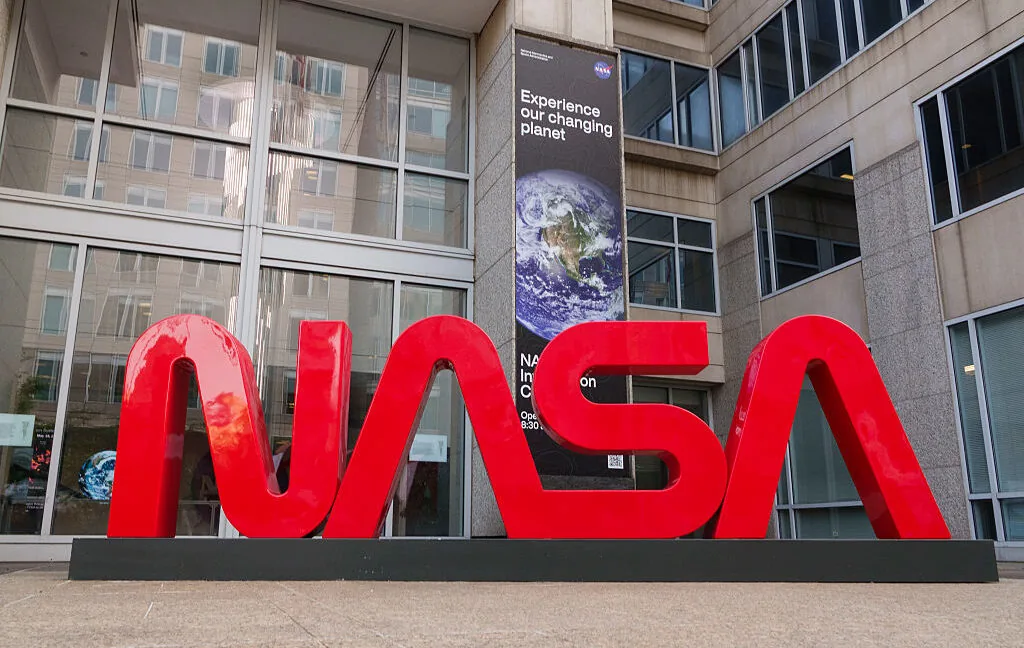
NASA Administrator Jared Isaacman announced a significant organizational overhaul on Friday, aiming to boost efficiency and better achieve the agency's ambitious goals, including returning astronauts to the Moon and establishing a lunar base. In a detailed email to employees, Isaacman outlined structural changes designed to concentrate resources on top national space policy priorities and reduce bureaucratic hurdles.
“I believe it is imperative to concentrate resources towards the highest priority objectives in the National Space Policy and liberate the best and brightest from needless bureaucracy and obstacles that impede progress,” Isaacman stated in the extensive internal communication. He emphasized that the restructuring will not result in job losses or the closure of any NASA field centers. Instead, the focus is on enhancing operational effectiveness and sharpening the agency's focus on its core missions: executing the Artemis Program, building an enduring Moon Base, developing a dedicated "Space Reactor Office" for nuclear power in space, fostering an economy in low-Earth orbit, and advancing the development of new X-planes and science missions.
The reorganization consolidates the agency's previous six main Mission Directorates into four, a move intended to simplify management and resource allocation for program leaders. Previously, program leaders often had to navigate multiple directorates for approvals and funding. Under the new structure, these leaders will report directly to Isaacman, bypassing the Associate Administrator for greater technical oversight and direct engagement. Amit Kshatriya, the former Associate Administrator, will now serve as NASA’s chief engineer, taking on more direct technical responsibility for key projects.
Streamlined Directorate Structure
The primary consolidations include merging the Space Operations and Exploration Systems Development directorates into a unified Human Spaceflight Mission Directorate. This aims to combine the expertise of NASA’s exploration and space operations teams to better support the next phase of human spaceflight. Lori Glaze will lead this directorate as Associate Administrator, with Joel Montalbano and Kelvin Manning as Deputies. Key divisions within this new directorate will include Low Earth Orbit, managed by Program Manager Dana Weigel; Moon Base, led by Program Manager Carlos Garcia-Galan; and Artemis, renamed from Moon to Mars and managed by Program Manager Jeremy Parsons.
Additionally, the Aeronautics Research and Space Technology directorates will combine to form a single Research and Technology Mission Directorate. This integration is designed to bring together NASA’s aeronautics, space technology, and nuclear power and propulsion capabilities into a cohesive, agile organization focused on developing crucial breakthrough technologies. Dr. James Kenyon will head this directorate as Associate Administrator, supported by Deputy Wanda Peters. Within this directorate, divisions will include Aeronautics, directed by Laurie Grindle; Advanced Research and Technology, led by Greg Stover; the Space Reactor Office, with Steve Sinacore as Acting Director; and Space Communications and Navigation, headed by Kevin Coggins. The Science Mission Directorate, under Nicky Fox, and the Mission Support Directorate, under John Bailey, will remain unchanged, though NASA plans to streamline overlapping functions within Mission Support, shifting responsibilities back to field centers.
A significant aspect of the restructuring is empowering NASA's field centers. Historically, centers like the Johnson Space Center in Houston and the Kennedy Space Center in Florida have operated with limited direct funding, often needing to compete for resources from mission directorates. Sources familiar with NASA's internal operations described this competitive environment as challenging. The new approach guarantees a baseline level of operational funding for each center, allowing them to concentrate on their core competencies rather than constantly seeking project-specific funds. "We will adjust the funding distribution so Centers have the financial support needed to sustain the baseline critical capabilities independent of near-term mission assignment," Isaacman explained in his letter. "In parallel, Centers will reduce the overhead burden applied to missions wherever applicable. This shift will allow Center Directors to focus on maintaining the infrastructure, workforce, and capabilities required for current and future missions."
The agency also announced Brian Hughes as the new director of the Kennedy Space Center in Florida, succeeding Janet Petro. Hughes, who previously served as NASA’s chief of staff in 2025 and has a background in public administration and political advising, was recently appointed as the agency's first senior launch operations director. His appointment to lead Kennedy, a bustling spaceport with numerous commercial and governmental users, is seen by some as bringing much-needed political and administrative acumen to navigate complex stakeholder relationships.
The overhaul places a strong emphasis on fiscal responsibility and efficiency. Isaacman noted the substantial resources lost over the years due to program cancellations and cost overruns, stating, "When you step back, it is worth considering how many additional missions we could have undertaken with the resources lost to program cancellations and cost overruns over the years. That is the problem we must fix, so the American taxpayer and space-loving community can receive the highest scientific return on every dollar we spend at NASA." Efforts to increase efficiency are also targeting prominent research institutions, such as the Jet Propulsion Laboratory (JPL) in California, which is managed by the California Institute of Technology. The agency plans to review operational efficiencies at JPL as its contract renewal approaches in 2028.