
Jodi the Tiny T. Rex Fossil Fetches $47.3M at Auction
A rare Nanotyrannus skeleton, nicknamed 'Jodi,' sold for $47.3 million at a New York auction, making it the second most valuable fossil ever discovered.

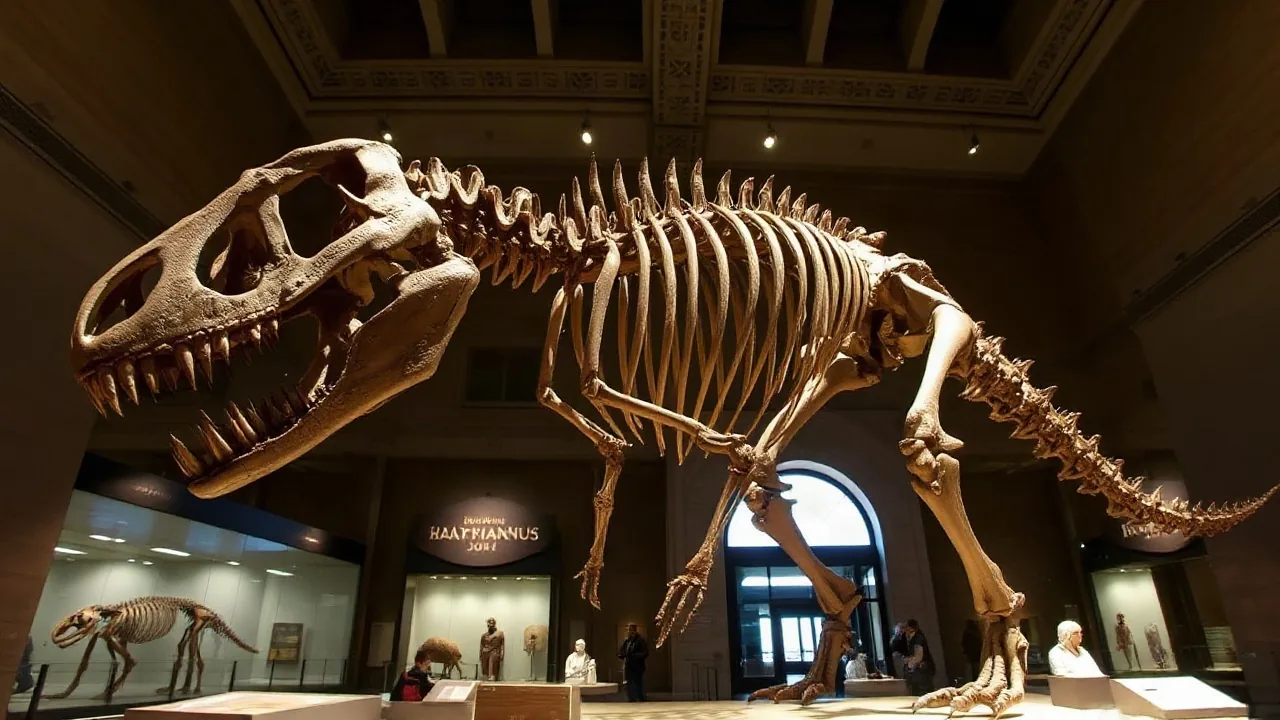
A remarkably well-preserved fossil of a Nanotyrannus, a smaller relative of the Tyrannosaurus rex, has shattered auction records, fetching an astonishing $47.3 million at a New York City sale. The specimen, affectionately nicknamed 'Jodi,' became the second most valuable fossil ever sold, underscoring the immense market for rare paleontological discoveries.
The sale, which concluded on October 28, 2026, saw intense bidding for the nearly complete skeleton. Experts believe Nanotyrannus lived alongside its larger cousin, T. rex, during the Late Cretaceous period, approximately 66 million years ago. This particular fossil, measuring about 15 feet long, is notable for its exceptional preservation, offering unprecedented insights into the anatomy and lifestyle of this diminutive but formidable predator.
A New Benchmark for Fossil Value
The $47.3 million price tag places 'Jodi' in elite company, surpassed only by a complete T. rex skeleton known as 'Stan,' which sold for $31.8 million in 2020 and was later resold for $35 million. Prior to this sale, Nanotyrannus specimens were relatively scarce, contributing to the heightened interest and competitive bidding.
Paleontologists have long debated the classification of Nanotyrannus, with some arguing it represents a distinct genus, while others suggest it might be a juvenile form of Tyrannosaurus rex. The acquisition of 'Jodi' by a private collector is expected to fuel further scientific study, potentially resolving long-standing questions about dinosaur evolution. The detailed preservation of its bones, including evidence of feather-like structures on some related specimens, offers a tantalizing glimpse into the appearance and potential behaviors of these ancient creatures.
The auction house declined to identify the buyer, citing a desire for privacy, but stated the fossil would be made available for research and public display under specific conditions. This sale highlights a growing trend of private investment in scientific specimens, raising both excitement for preservation and potential concerns about access for the broader scientific community. The market for scientifically significant fossils has seen dramatic growth in recent years, with high-profile sales attracting global attention and significant capital.
The provenance of 'Jodi' traces back to its discovery in the Hell Creek Formation in Montana, a region renowned for yielding significant dinosaur fossils. Its journey from excavation to auction block involved meticulous preparation and study, culminating in this landmark event. The dinosaur's unique characteristics, including its relatively slender build and elongated skull compared to T. rex, have fascinated researchers for decades. This sale solidifies its place not just in paleontological history, but also as a significant commodity in the collectibles market.
The implications of such high-value sales extend beyond the fossil market. It prompts discussions about the ethics of selling scientific heritage and the potential for these significant discoveries to end up in private collections inaccessible to the public and many researchers. However, the substantial sums realized can also incentivize further exploration and conservation efforts, creating a complex dynamic within the field of paleontology and natural history.